How to keep cool in a UK heatwave — NHS and UKHSA guidance.
A practical, fact-checked summary of what to do when the mercury climbs, drawn from NHS 'Beat the Heat', UKHSA Heat-Health Alerts and CIBSE overheating criteria.
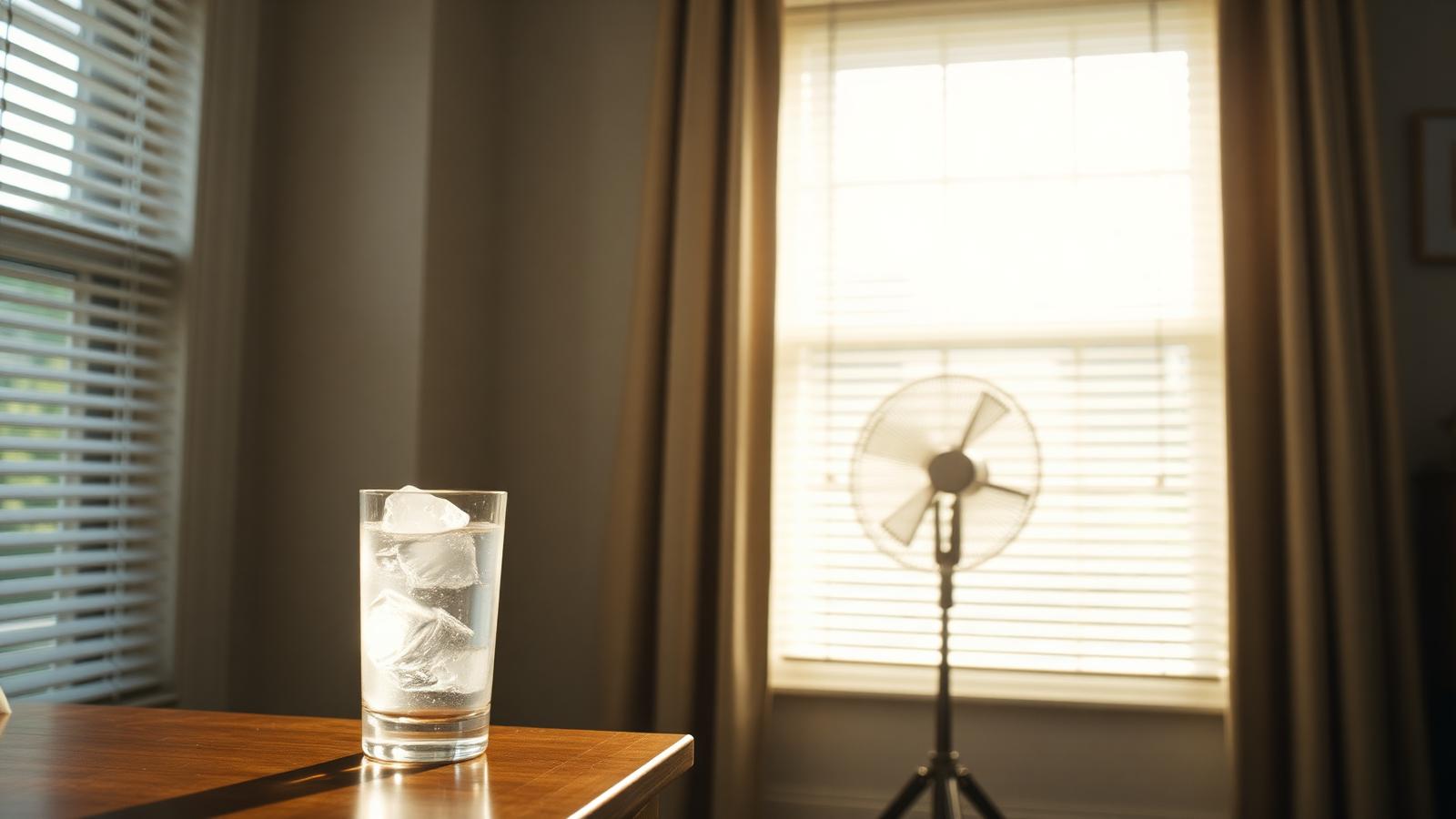
Stay out of the sun 11am–3pm, drink water before you feel thirsty, keep sun-facing curtains closed by day and windows open overnight, and check on older neighbours daily. If someone is confused, has hot dry skin or a temperature ≥ 40 °C, call 999 — that is heatstroke.
Four steps that carry the most weight.
Stay out of direct sun 11am–3pm
This is the hottest part of the UK day. If you must be outside, seek shade, wear a wide-brim hat, apply factor 30+ sun cream and slow your pace. NHS and UKHSA guidance both single out this window as the highest-risk period.
Drink water regularly, before you feel thirsty
Thirst lags dehydration by around an hour. Sip water through the day; avoid excess alcohol and very sugary drinks, which pull water out of your cells. Older adults and young children are especially prone to under-drinking.
Keep your home cool
Close curtains and blinds on sun-facing windows during the day. Open windows overnight when outside air is cooler. Move to the coolest room — usually a north-facing ground-floor room — to sleep.
Check on people at higher risk
The NHS lists older adults, babies and young children, people with heart/lung/kidney conditions, and people taking certain medications as higher-risk. A daily phone call during hot spells matters.
Know the line between heat exhaustion and heatstroke.
Heat exhaustion (act within 30 minutes)
Tiredness, dizziness, headache, feeling sick, heavy sweating, cramps, fast breathing or pulse, temperature 38 °C or above. Move to a cool place, remove excess clothing, drink water or a sports drink, and cool the skin with wet cloths or a fan.
Heatstroke (call 999)
Signs include confusion, loss of coordination, seizures, loss of consciousness, hot dry skin, or a temperature of 40 °C or above. This is a medical emergency — call 999 while continuing to cool the person.
What people ask most during a UK hot spell.
What is the safest indoor temperature during a UK heatwave?
Does closing curtains actually help?
Should I open windows during a heatwave?
How much water should I drink in a heatwave?
Is it dangerous to exercise in a UK heatwave?
Sources for every claim on this page.
- NHS — Heatwave: how to cope in hot weather
- NHS — Heat exhaustion and heatstroke
- UKHSA — Beat the Heat: hot weather advice
- UKHSA — Heat-Health Alerting system (with the Met Office)
- WHO — Heat and health fact sheet
- Met Office — Heatwave
- CIBSE TM52 — The limits of thermal comfort
Related reading: heat exhaustion & heatstroke first aid, cool an office without AC, AC vs fans in a heatwave, employer heat guidance.