How to cool an office without air conditioning.
Six evidence-based tactics that work in a real UK office, drawn from CIBSE TM52 passive design principles, WHO fan guidance and HSE thermal comfort duty.
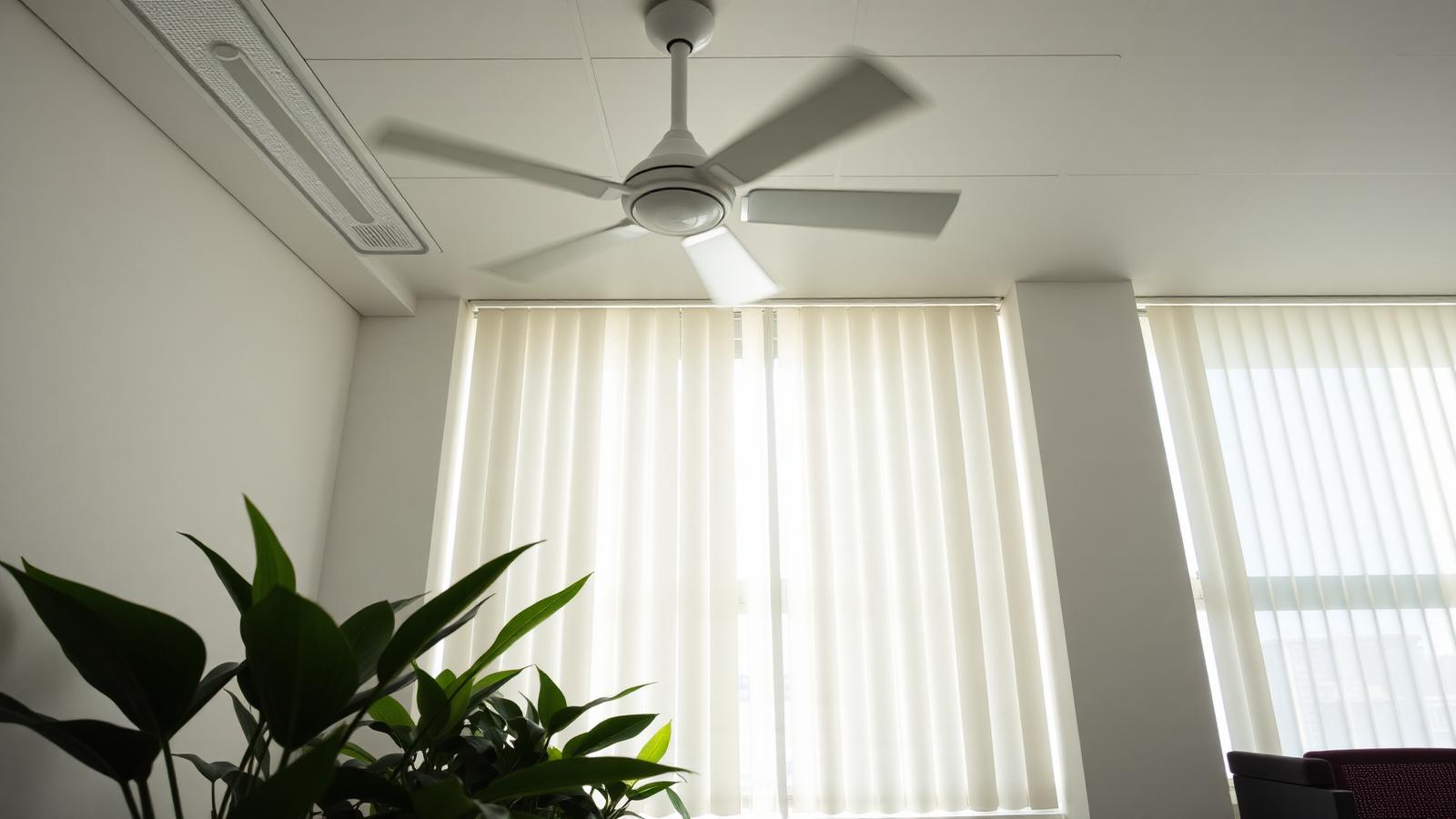
Close sun-facing blinds before 10am, run night purge cooling, turn off unused PCs and monitors, add ceiling and pedestal fans, flex working hours to avoid 11am–3pm, and provide chilled water on every floor. Together these hold a typical UK office 3–5 °C cooler — enough for most summers, but not for a red Heat-Health Alert.
In order of impact.
- 01
Close blinds on sun-facing windows before 10am
Solar gain is the biggest single heat load in most UK offices — external shutters block up to 90%, internal blinds 30–40%. Get them closed before the sun hits the glass, not after.
- 02
Purge cool air overnight and early morning
Open every window when outside air is cooler than inside. This is 'night purge cooling', the standard passive strategy in CIBSE TM52. In most UK offices this alone knocks 3–5 °C off next-day peak temperature.
- 03
Turn off heat sources you're not using
Every desktop PC produces around 100–150 W of heat, monitors another 30–60 W. Unused meeting rooms, printers on standby and legacy AV racks add up. Turn them off.
- 04
Use ceiling and pedestal fans
Fans don't cool the air, they cool the person — air movement over skin allows sweat to evaporate. WHO advises fans give useful cooling below 35 °C air temperature; above 40 °C they can actually accelerate dehydration.
- 05
Flex working hours
Start early, finish early — Acas guidance explicitly supports flexible hours during heatwaves. Getting the demanding work done before 11am avoids the 11am–3pm peak flagged by NHS and UKHSA.
- 06
Provide cold drinking water on every floor
HSE Regulation 22 requires an adequate supply of drinking water. In a heatwave, chilled water within 30 seconds' walk of every desk is a low-cost, high-impact intervention.
The limits of not having AC.
- —Passive cooling can't hold operative temperatures below 25 °C on days above ~28 °C outside.
- —Night purge doesn't work in dense urban sites where outside night temperatures stay above 20 °C.
- —Fans stop being useful once air temperature exceeds skin temperature (~35 °C).
- —Vulnerable workers still need active cooling regardless of the tactic mix — HSE thermal comfort duty is absolute.
Related reading: AC vs fans in a heatwave, employer HSE guidance, office AC installation, cost guide.